

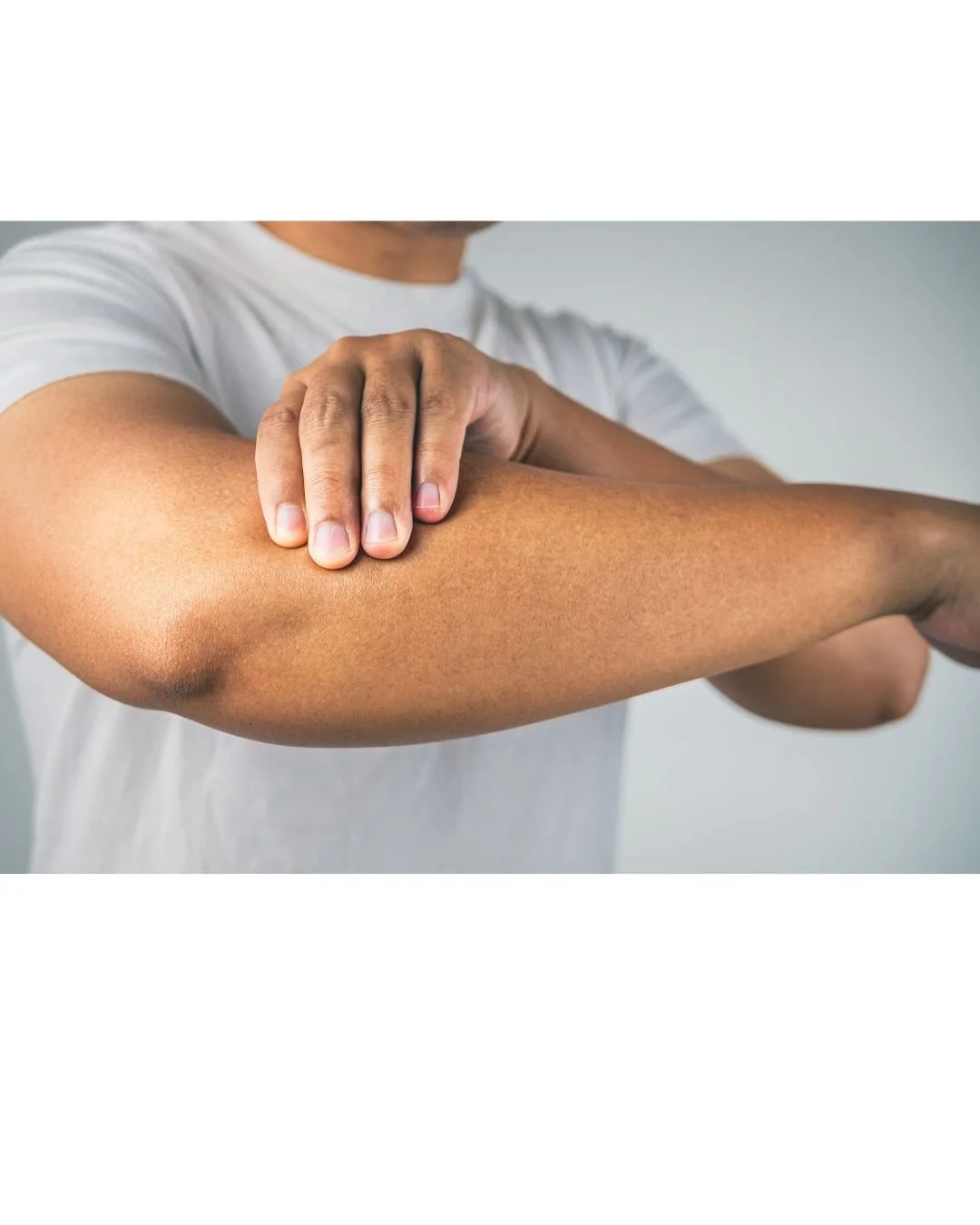
What is tennis elbow?
Tennis elbow is one of the most common causes of outer elbow pain — but despite the name, most people who develop it don’t play tennis! Tennis elbow is a very painful musculoskeletal condition of the elbow that is generally known as lateral epicondylitis. However, research indicates that it is not an inflammatory pathology and it should be classified as a tendinopathy, which is more a long-term tendon dysfunction.
This blog answers the five most frequently searched questions about tennis elbow and explains current evidence-based management, including the use and benefits of shockwave therapy.
1. What causes tennis elbow and who gets it?
Tennis elbow occurs when the wrist extensor tendons are repeatedly overused. This results in overload of wrist extensor muscles that can form small tears (micro tears) where the extensor tendon attaches to the lateral epicondyle.
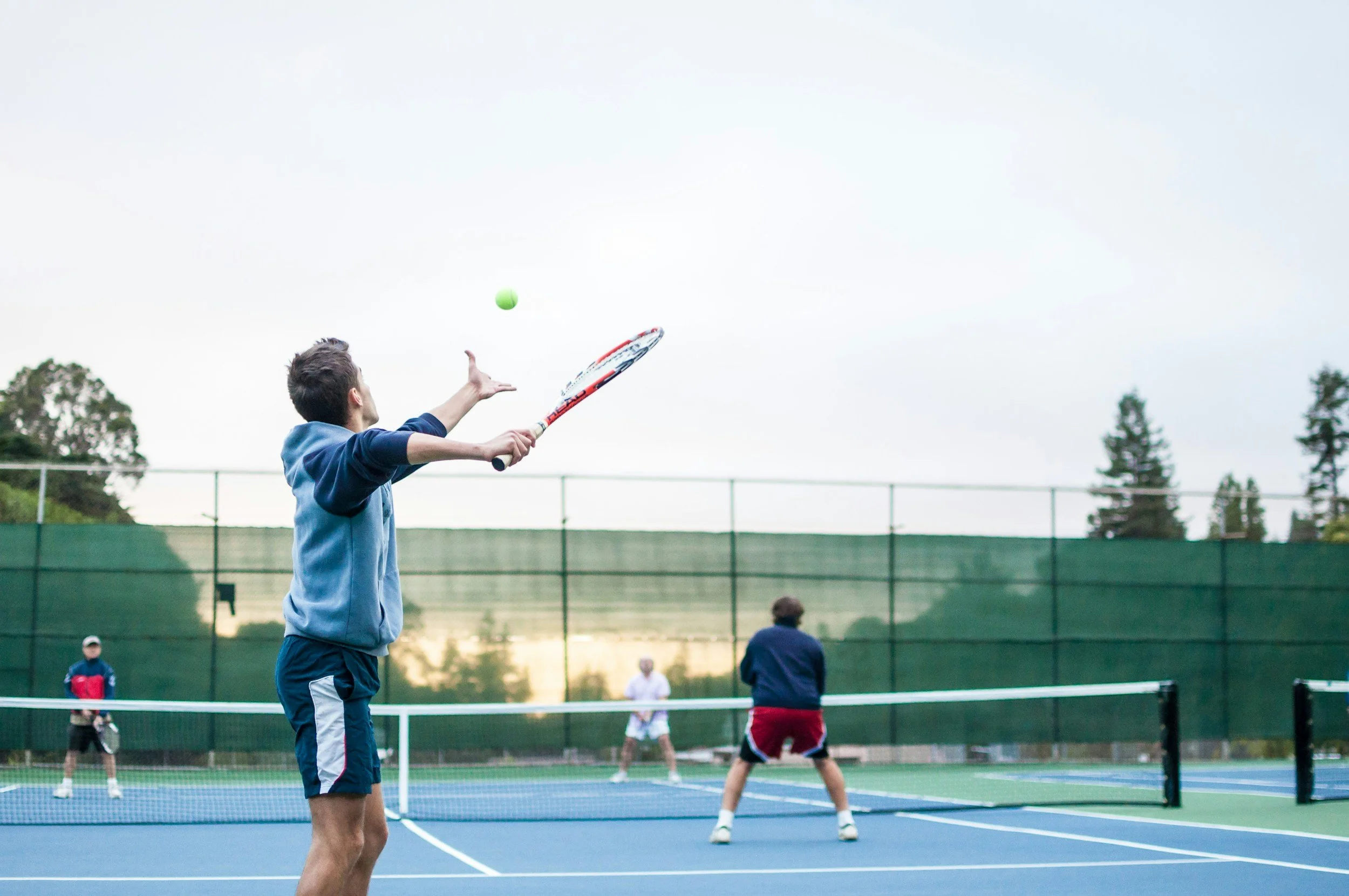
This can happen with gripping, lifting, or repetitive forearm activities. It affects men and women equally, generally aged 30–50 years old, and is particularly common in manual or repetitive-hand occupations such as builders or boilermakers/welders, as well as recreational sporting enthusiasts who use racquets or bats.
At Bodyfocus, we see this condition commonly presented to our Launceston clinic during certain seasons of the year; most commonly in winter from cutting and stacking firewood, and in spring from gardening.
Tennis elbow is more commonly a cumulative type injury, where the injury occurs as a consequence of relatively long-term exposure to musculoskeletal load, where the mechanisms of injury are as a result of an accumulation of mirco-damage at a rate which exceeds the tissues capacity for repair. Occasionally, tennis elbow can be from an acute injury where the immediate exposure exceeds that tissue's capacity to load or force.
2. What are the symptoms and how is it diagnosed?
Common symptoms include:
Pain, tenderness, or a burning sensation over the outside of the elbow and outside of the forearm
Weaker grip strength
Symptoms are often worsened with increased forearm activity, even innocuous tasks like opening a jar, pouring from a kettle, or shaking hands.
Diagnosis is generally clinical, based on the patient's history, symptoms, and an examination that involves palpation and active resisted extension testing of the wrist and fingers. Imaging, such as ultrasound or MRI, isn’t usually required and is only recommended for persistent or atypical cases.
3. How long does it take to recover?
Recovery varies — some people improve within weeks or months, although many people experience symptoms for 6–12 months or longer. Unfortunately, tennis elbow is a condition that can take an extended period to improve, and become chronic in nature (>3 months).
The key to recovery is getting your elbow pain assessed early, addressing the cause of overload, and following a structured plan provided by your osteopath at Bodyfocus to avoid the condition becoming chronic.
4. What conservative treatments work best?
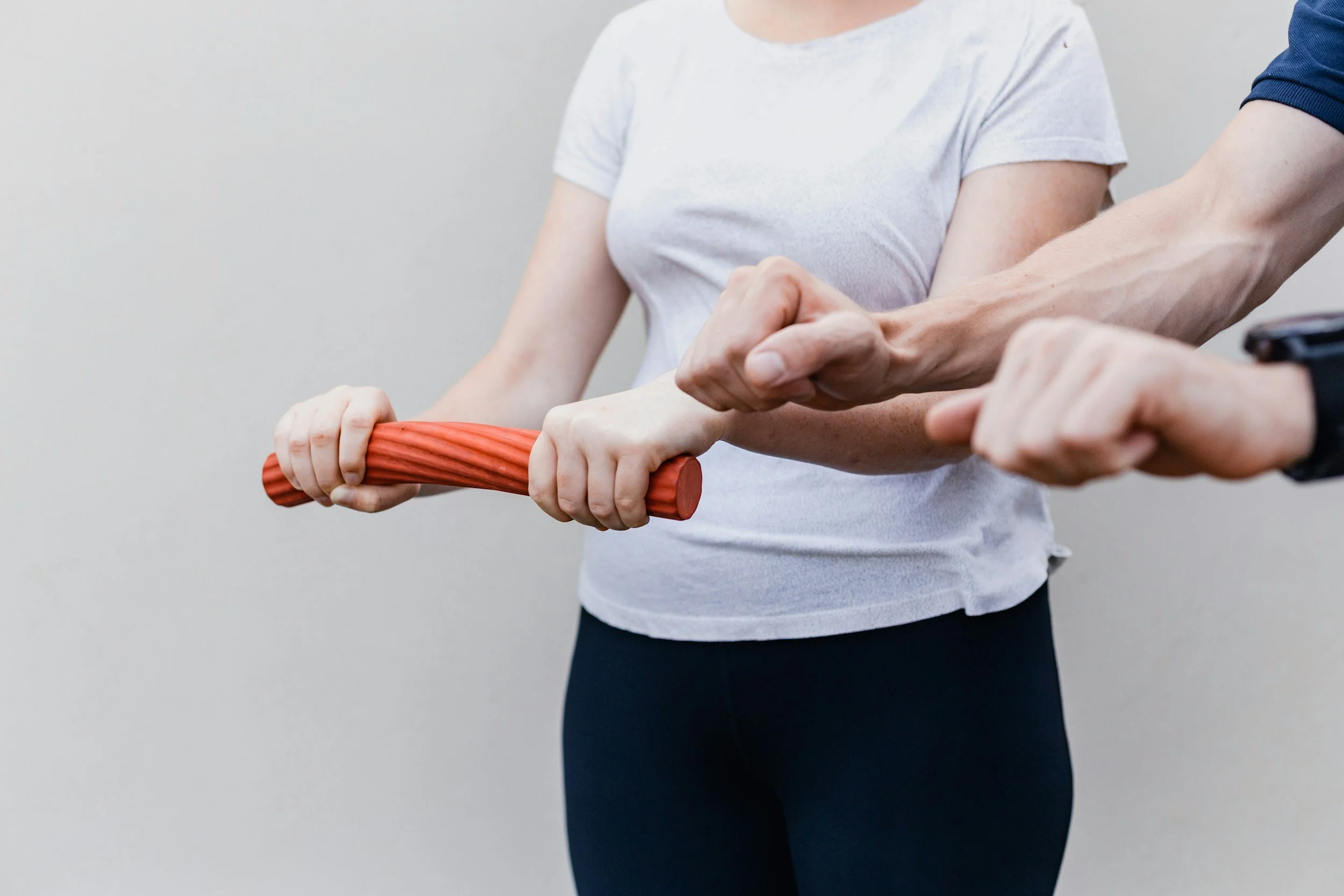
The best evidence supports an active, exercise-based approach focused on progressive tendon loading combined with manual therapy, education, ergonomic advice, and temporary activity modification.
Activity modification: Avoid or adjust aggravating tasks where possible.
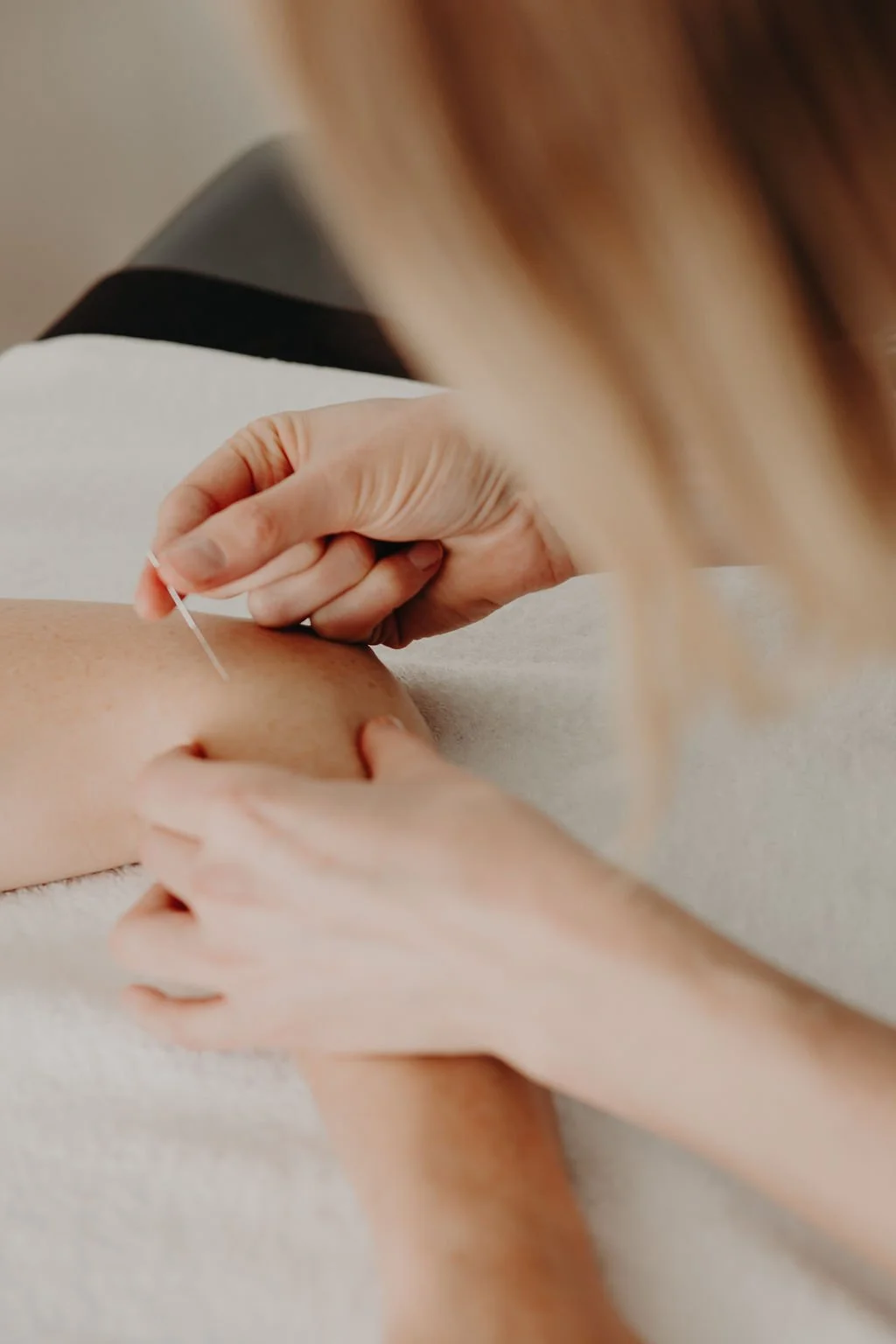
Manual therapy, such as soft-tissue massage, dry needling, and stretches may assist with mobility and short-term pain relief.
Massage assists to increase blood flow to the affected tendon to promote the body's natural healing response and can relieve the tension from the muscles placed on the tendon and its insertion.
Isometric loading: Short holds of wrist extension can reduce pain in early stages.
Ice: applying ice initially after an injury or after activity where you get an increase in pain.
Heat: alternatively, applying heat to the affected area in chronic conditions can help with pain and improve blood flow.
Progressive strengthening: Gradually increasing resistance through eccentric and heavy slow resistance exercises.
Bracing: A counterforce strap may reduce tendon load temporarily when performing tasks that aggravate your pain.
Your osteopath will also assess mobility of your wrist, elbow and shoulder, as well as your neck for possible referred pain.
Self massage with application of natural anti-inflammatory products such as Medirub.
5. Is shockwave therapy effective for tennis elbow?
Extracorporeal Radial Shockwave Therapy (RSWT) is a non-invasive treatment that delivers acoustic pressure waves to the affected tendon. It is more helpful in chronic cases and we see good results at Bodyfocus for tennis elbow that has been present for >3 months.
How it works
These non-invasive shockwaves activate the body’s self healing process to reduce pain by:
Increasing metabolic activity through improved blood circulation and formation of new blood vessels
Nurtures and accelerates the healing process through cell regeneration and collagen synthesis
Stimulates nerves to help decrease sensitivity in the area of pain
Break up calcification within tendons which is reabsorbed by body
Also has an analgesic effect immediately after treatment by depleting Substance P, a neurotransmitter associated with pain
When it’s appropriate
For chronic or persistent pain (>3 months).
Safe - RSWT is painful during the treatment which lasts for approximately 5 minutes, however, there are generally no-adverse side effects.
When patients prefer to try a non-invasive and drug-free adjunct alternative to injections or surgery.
SWT vs Cortisone vs PRP injection
Cortisone
Benefits - quick, short-term pain relief.
Concerns - benefits are temporary, and many studies show that cortisone injections can weaken the tendon tissue and delay actual healing, leading to higher rates of recurrence in the long-term.
SWT
Benefits - completely non-invasive, more effective in chronic cases. Promotes the body's natural healing properties.
Concerns - takes 3-5 sessions, generally you will know if it is going to work after 2 sessions.
PRP injections
Benefits - improved long-term outcomes compared to cortisone injections. Promotes tissue regeneration and healing
Concerns - requires drawing blood, increased costs, pain at injection site, takes 4-8 weeks to see benefits.
Evidence from research - Journal of Orthopaedics, 2005
“Combining RSWT with traditional physical therapy is superior to conventional physical therapy and significantly reduces pain intensity caused by tennis elbow, increases maximal grip strength, and improves upper extremity function and work performance”.
77% of patients had improvement for tennis elbow (Journal of Orthopedics, 2005)
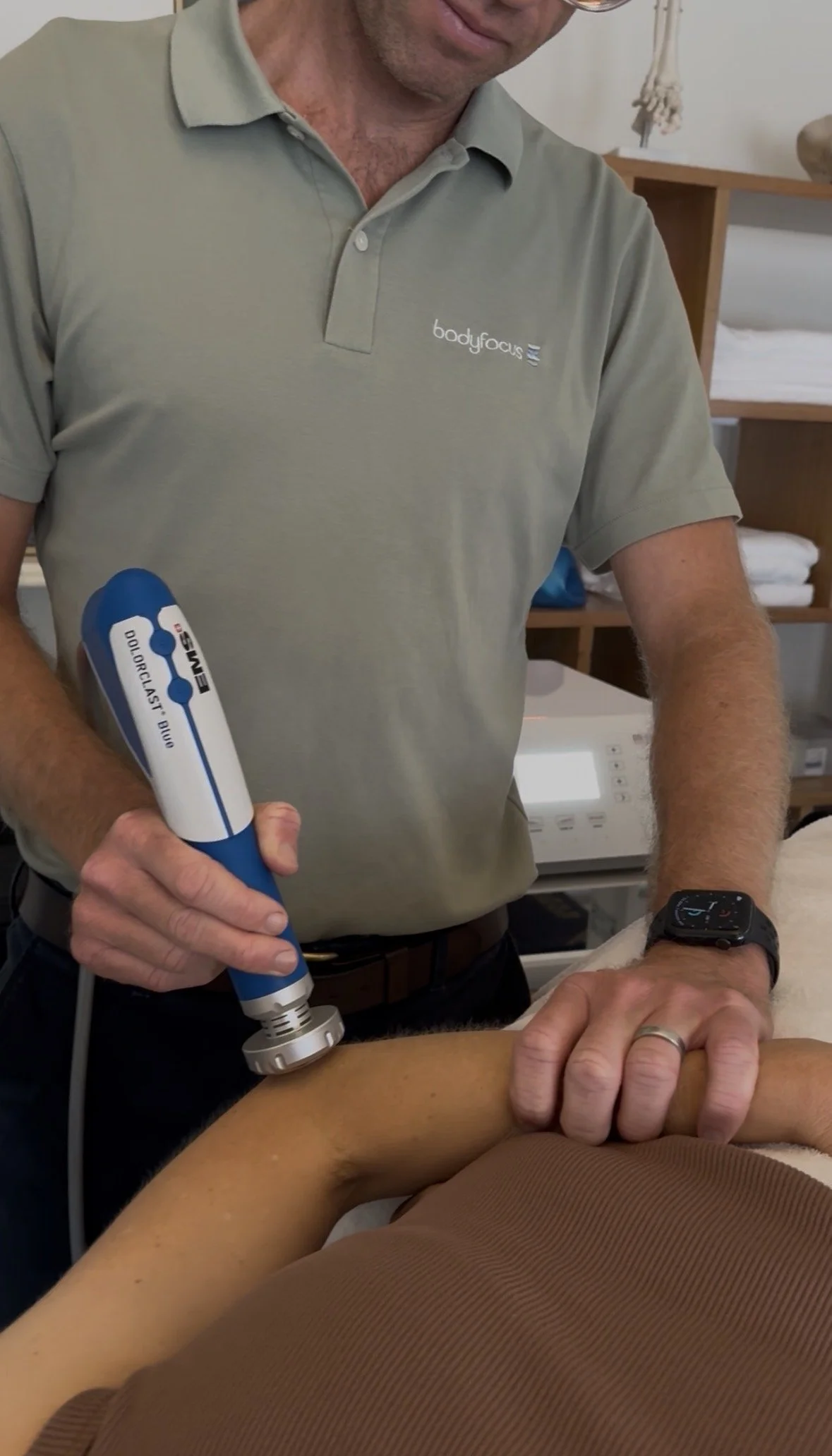
Treating lateral epicondylitis with RSWT helps overcome inconvenient symptoms in chronic cases and can bring remarkable benefits for patients in tendon healing and immediate pain relief!
Sample Exercise Progression
Phase 1 (0–2 weeks): Isometric wrist extension holds 5 × 45s, twice daily.
Phase 2 (2–6 weeks): Eccentric wrist extensor exercises 3 × 10–15 reps, twice daily.
Phase 3 (6–12 weeks): Heavy slow resistance (3 × 8–12 reps), plus task-specific training.
Key takeaway
Tennis elbow is best managed through progressive exercise and load modification, not rest alone. Shockwave therapy has shown to be effective in persistent cases, particularly when combined with ongoing strengthening and ergonomic advice. With patience and consistent rehab, most people make a full recovery.
Need help with ongoing elbow pain? Book an appointment with one of our osteopaths at Bodyfocus for an individualised assessment and management plan.

